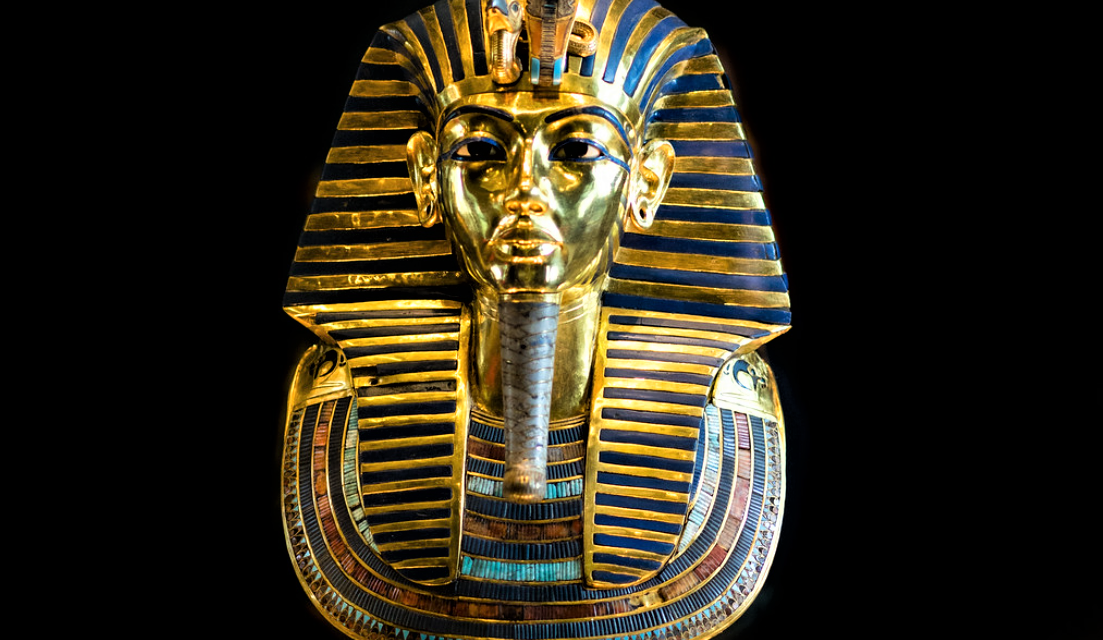

When Howard Carter found “wonderful things” in the tomb of Pharaoh Tutankhamun in 1922, they included two trumpets that appeared to have a curse of their own. There is no better secret of antiquity than that of the Egyptian pharaoh Tutankhamun.
The last of a royal lineage that ruled during the 18th Dynasty of the New Kingdom, the "Boy King" ascended the throne upon the death of his father Akhenaten at the age of eight or nine (around 1334 BC) and ruled until his death some nine years later.
His tomb was thought to have been lost in the sands of time somewhere in the Valley of the Kings near Luxor until it was discovered in 1922 by archaeologist Howard Carter (although the steps leading to it were found by a young water carrier), working under the patronage of Lord Caernarvon. After digging out the rubble leading to the sealed main door, Carter drilled a hole and peered through.
Wonderful things
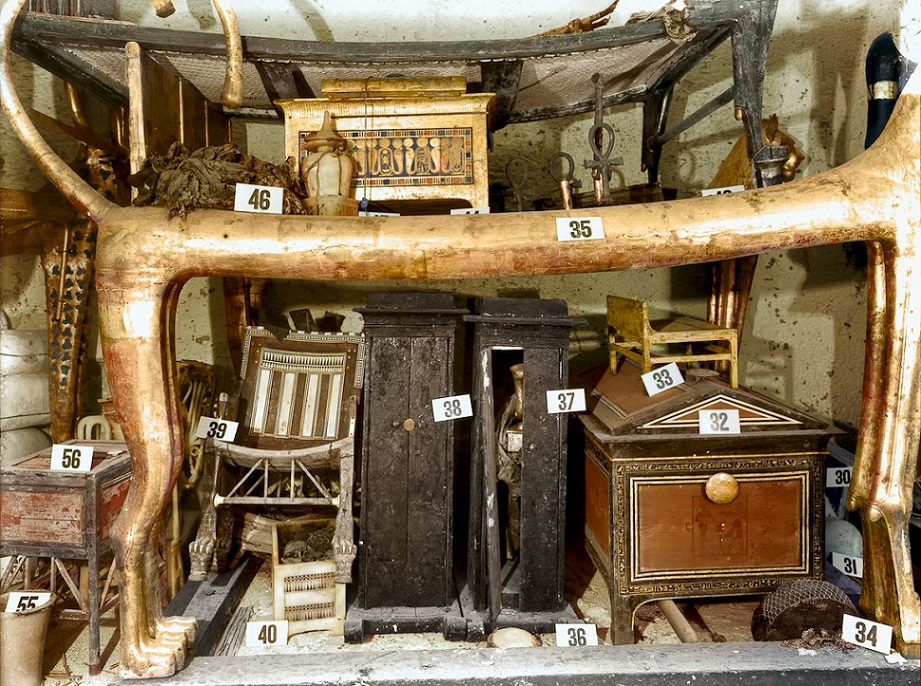
At first he couldn't see anything, but then, as he remembered; "...as my eyes adjusted to the light, details of the room within slowly emerged from the mist, strange animals, statues and gold - the glitter of gold everywhere." He was understandably taken aback by the enormity of what lay before him, prompting Lord Caernarvon to ask, "Can you see anything?"
“Yes,” he answered; “Wonderful things!”
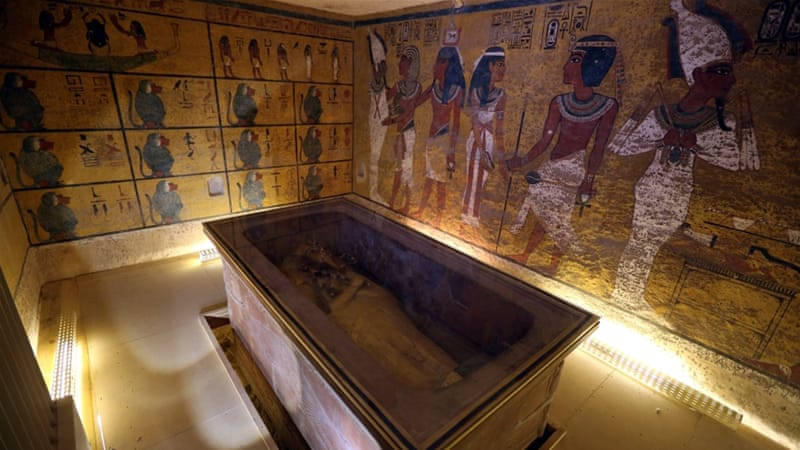
And this was just an antechamber - packed with 5,398 treasures and artifacts, from chariots and chairs to jewelry and food parcels for the king to munch on in the afterlife. Luckily, Carter's team meticulously recorded everything before they broke through a plaster wall a year and a half later and came across the burial chamber itself. Wrapped in three sarcophagi lay Tutankhamun - his embalmed body was finally revealed under the most beautiful face mask made of solid gold, lapis lazuli, carnelian, turquoise, obsidian and glass. It was the largest archaeological find of all time.
Bad stories
Soon, however, lurid stories of the "Curse of the Pharaohs" were being printed, as first Lord Caernarvon and then others reportedly died prematurely - although of the 58 people present at the tomb's opening, only eight died in the decade following the discovery. It was all a bunch of old toot; Caernarvon died of an infected mosquito bite rather than a mummy's curse, and Carter himself managed to hold out until 1939, when he died of lymphoma.
It was all made up by rival newspapers who had missed out on the exclusive deal Caernarvon had signed with The Times. Still, it was a story that captured the public's imagination, especially when it was announced in 1939 that a silver trumpet found in the tomb could be heard for the first time in over 3,000 years.
Tutankhamun trumpet
Still, it was a story that captured the public's imagination, especially when it was announced in 1939 that a silver trumpet found in the tomb could be heard for the first time in over 3,000 years.
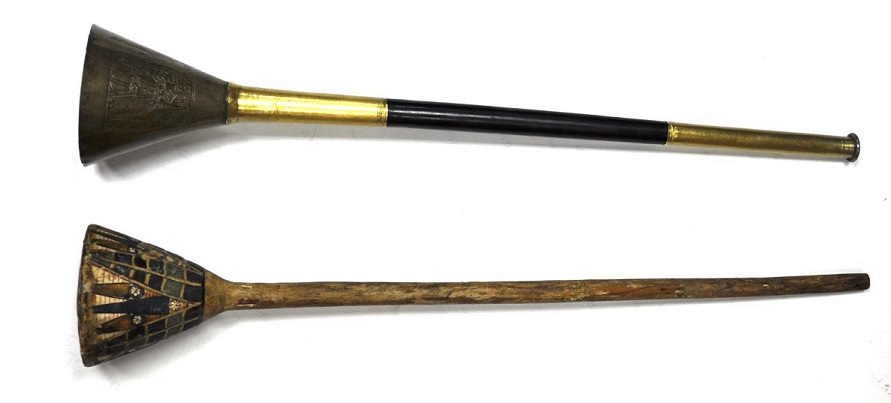
The “Tutankhamun Trumpet” was one of two discovered in the antechamber. One, about 50 cm long, was made of copper alloy; the other, about 58 cm, was made of silver. The bells were made of a thinner electron metal and were about 4 inches in diameter. Each had a brightly painted wooden core that had to be inserted to protect it when not in use.
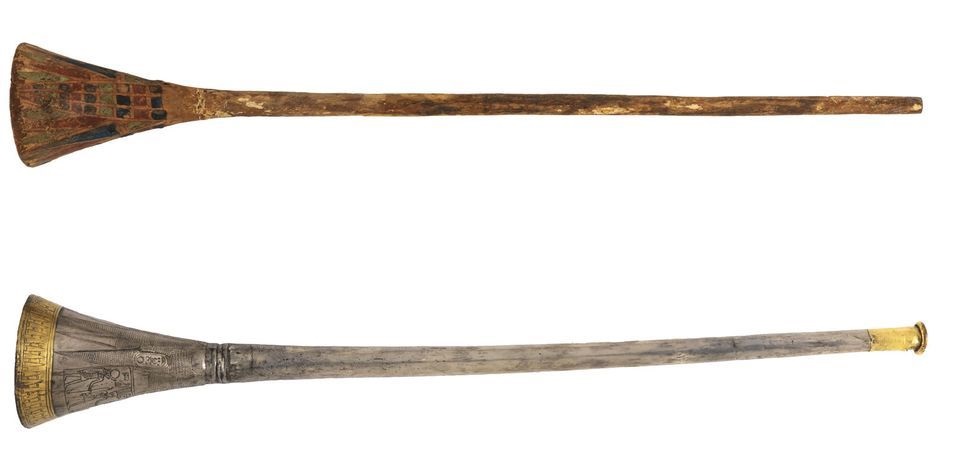
The body of the shorter copper trumpet consisted of a rolled tube (0.2–0.25 mm thick) that expanded in bore size. The longitudinal seam was carefully polished on the outside, but left rough on the inside. The silver trumpet was made in the same way.
At the top of both the metal was rolled to form a rounded lip about 3.25 mm thick, while the bells (which were riveted) were decorated, similar to modern instruments, with figures and hieroglyphs representing the gods Ra-Hrakhty, Ptah and Amun.
Historical broadcasting
Anticipation was high when BBC radio presenter Rex Keating announced that he had indeed been given permission to play both trumpets on a historic broadcast for the first time in millennia. However, Keating had no respect for antiquity. Although he was told that, when played properly, the instrument would produce only one note "or two at the most," he later wrote that he was "...determined to get them to produce a simple melody and this would require three or four."
The task was initially given to an unnamed bandmaster from one of the hussar regiments stationed in Egypt and rehearsals were organized. On the second, Keating recalled that the musician made "courageous but unsuccessful attempts to extract three notes from the copper trumpet" when none other than King Farouk of Egypt and his entourage appeared.
The nervous player picked up the silver trumpet, but still unsure how to play it, he inserted a modern bugle mouthpiece and smashed it with what was described as "deafening disharmony." According to Keating, the bandmaster stood there "a picture of astonishment" holding "only the stem of the trumpet" in his hand. The silver bell had been crystallized and broken into pieces for over 3,000 years.
The curse strikes again?
King Farouk ordered the instrument repaired after Alfred Lucas, a member of Carter's archaeological team, was said to have become so distressed that he had to be hospitalized. Had the “curse” struck again, especially since the unfortunate bandmaster was then “banished” into the heat of the desert, never to be heard from again?
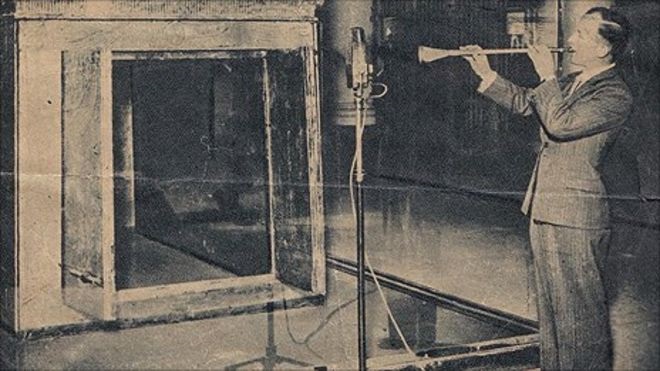
Undeterred, the instrument was hastily repaired and on April 16, 1939, the replacement player, Kapellmeister James Tappern of Prince Albert's 11th Royal Hussars Regiment, stepped forward to perform live from the Egyptian Museum in Cairo to an estimated worldwide audience of 150 million people.
Posthorn gallop
By all accounts, the event was kicked off with the sort of imperial British solemnity appropriate to the occasion (and which paid homage to the long-dead Pharaoh). Tappern first played the silver trumpet in front of the microphone, followed by the copper trumpet, although for a fleeting moment you feel like he's about to break into an impromptu rendition of "The Post Horn Gallop." Although a modern mouthpiece was used again this time, the instruments remained intact and produced what musicologist Hans Hickman described as a “rough and powerful sound”.
Not the sound of history
However, it was not a sound that Tutankhamun would have been familiar with, as the instrument was not at all designed to be played with any type of mouthpiece. Wall paintings found in tombs showed that the instrument was simply pressed to the lips and blown (the wooden core was placed neatly under the arm), while modern reproductions showed that the trumpets produced three tones; a low note with very low tonal power, a well-centered middle note (B3) and, with some difficulty, a higher note with clear pitch (D4).
Later investigations led experts to believe that it was essentially used as a military "call and response" tool, or blown, to keep work groups in order. It is also believed to be a possible direct descendant of the biblical Hatsotserah, similar to that used by the Israelites who left Egypt around the same time.
These were the instruments that Moses was commanded to make (Numbers 10 verse 2), they were about a cubit long (50 cm). The likely date of the Exodus was thought to be only about a century later than that of Tutankhamun's death.
The old king does
The discovery of Tutankhamun's tomb was a worldwide sensation and "Egyptmania" soon became fashionable - including in music. Unfortunately, the instruments were not heard on the wonderful 1923 recording of The Happiness Boys by Billy Jones & Ernest Hare entitled "Old King Tut", although there is still a cracking piece of trumpet and glissando trombone...
No other “pharaoh trumpets” have been unearthed to date, and a supposedly priceless example displayed at the Louvre in Paris was later revealed to be nothing more than the ornate top of an incense stand.
Tempt fate
Tutankhamun was certainly not raised from the dead (he now lies back in his original resting place), although the outbreak of World War II came a few months after the first radio broadcast, followed by the Six-Day War between Egypt and Israel, and it was played a second time in 1967.
Perhaps tempting fate, one of the trumpets was played again in 1990, which was followed by the Gulf War, while it was last heard in 2011 (played by a mischievous member of the museum staff during cleaning), heralding the Egyptian Revolution.
The bronze trumpet was stolen during these riots, but was returned a few weeks later, left in a bag on the Cairo subway along with other stolen items. The culprit may have been afraid of misfortune after Al-Ahram newspaper printed that the museum curator had said it had "magical powers" and that "war would break out" if it was blown up.
They are currently on display at the Egyptian Museum in Cairo.
You could say they understandably haven't been played since...