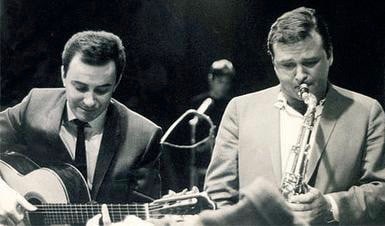

Stan Getz was one of the most influential saxophonists in the world for decades. Getz was a pioneer in the field of cool jazz. He had his greatest musical successes in his Latin phase. He later became an outstanding mainstream saxophonist. He was considered an elegant melodist who won eleven Grammy Awards.
Getz is considered one of the most renowned jazz musicians and was also recognized by his fellow musicians. The reasons for this lie in his great melodic feeling and his often exquisite tone. Getz is immediately identifiable both through his individual tone formation and his specific phrasing. During the game he always seemed very cold, almost apathetic. His music was still highly emotional, concentrated and technically absolutely perfect. He never played ecstatically, but always with the highest intensity despite his restraint - the epitome of the cool jazz improviser.
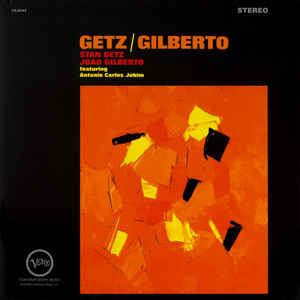
In 1964 the Getz/Gilberto album was released
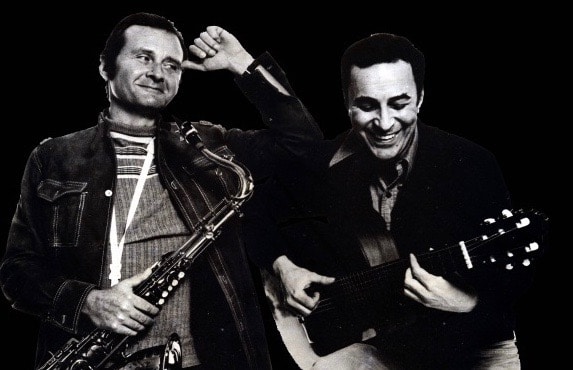
On the record Stan Getz, who had already interpreted bossa nova pieces on the Jazz Samba album in 1962, plays with two founders of this style. The singer and guitarist João Gilberto and the pianist Antônio Carlos Jobim, who wrote most of the compositions. It became one of the best-selling albums of all time. The singer Astrud Gilberto, who performed the piecesThe Girl from IpanemaandCorcovadosang, thereby gaining world fame. Interestingly, producer Creed Taylor left the recording for over a year before releasing the album for unknown reasons.
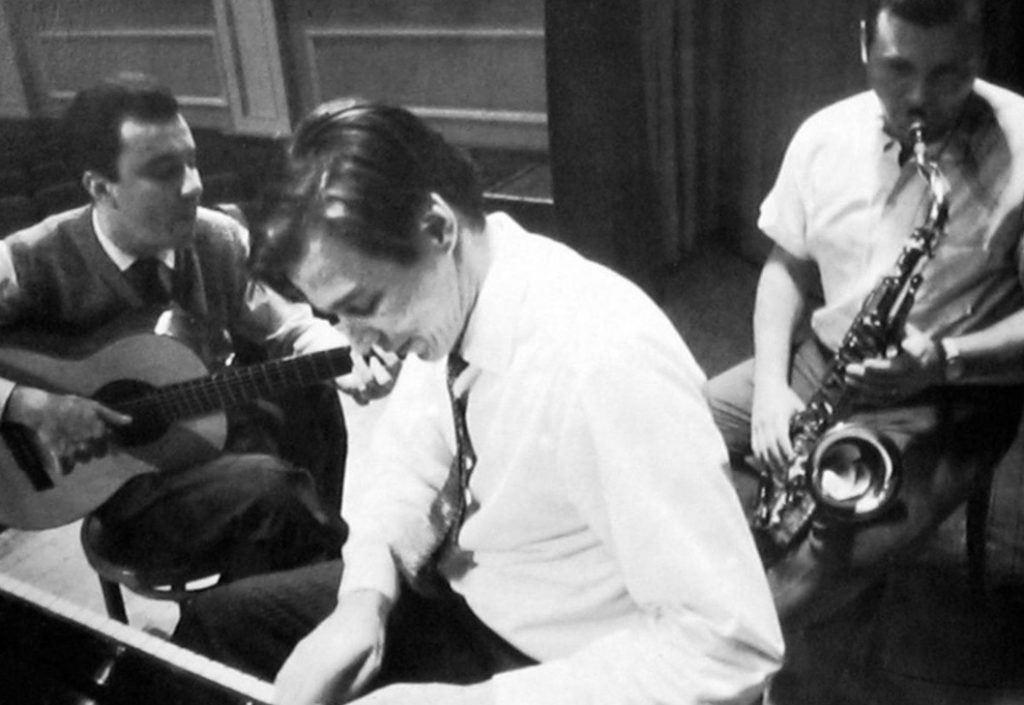
The recording session in March 1963
The recording session began on March 18, 1963 at A&R Recording Studios in New York City and was completed the following day. Phil Ramone, who owned A&R Recording Studios, was the album's engineer. Produced by Creed Taylor, the album was produced byVerve Recordspublished. The rhythm section behind Getz was Jobim on piano, Sebastião Neto (pt) on bass and Milton Banana on drums Astrud Gilberto, who had never sung professionally before, was featured on two tracks,The Girl from IpanemaandCorcovado (Quiet Nights of Quiet Stars). Jobim's piano performance is minimalist, contributing only what is needed. In addition to playing the piano, Jobim was also responsible for some of the arrangements and co-wrote almost all of the songs.
According to Ruy Castro, Gilberto and Getz often disagreed about which was the best take, leaving the choice to producer Creed Taylor. During one session, Gilberto, who spoke no English and was impatient with Getz's rhythmic style, said to Antônio Carlos Jobim, "Tell that gringo he's an idiot." Jobim then translated: “Stan, João says that it has always been his dream to take on you”. Getz's harsher approach to music did not appeal to Gilberto, who preferred a more refined style. Despite the tensions in the studio, Gilberto would continue to work with Getz. Ten years after the publication ofGetz / GilbertoThe two met at the Keystone Korner Club in San Francisco for a six-day engagement to promote their new albumThe Best of Two Worlds.
The success of Getz/Gilberto
The success of the album marks a high point in the bossa nova wave in the USA. The style was just throughGetz/Gilbertoalso very popular in Europe and the rest of the world. The LP won the 1965 Grammy Awards for “Best Album of the Year”, “Best Jazz Instrumental Album” and “Best Technical Recording” (sound engineer: Phil Ramone). The single version ofThe Girl from Ipanemawon the Grammy for Single of the Year.
The music magazine Jazzwise included the album on the listThe 100 Jazz Albums That Shook the Worldon.
Keith Shadwick wrote at the time: "This is perhaps the coolest, definitely most memorable marriage of melody and Latin rhythms anywhere, and it was achieved through the supreme genius of Tom Jobim's melodies and sparse piano accompaniment, Gilberto's uniquely intimate singing and guitar playing, a rhythm section that breathes life and color, all crowned by the supreme melodist, Stan Getz. That and Joao's wife Astrud as a burden Minute show stealer and you have a classic on your hands.”
Rolling Stone magazine ranked the album at number 22 in its 2013 list of The 100 Best Jazz Albums. It is ranked number 447 in the magazine's list of the 500 best albums of all time. Pitchfork Media lists Getz/Gilberto at number 103 on the 200 best albums of the 1960s.The Girl from Ipanemachose the website at number 63 on the 200 best songs of the decade. In 2001 Getz/Gilberto was inducted into the Latin Grammy Hall of Fame.
Cover artwork
The album cover is the work of the Puerto Rican artistOlga Albizu. An abstract expressionist, she also designed the covers of several of Getz's other bossa nova albums.
Susan Noye Platt, art critic and historian, wrote of Albizu's relationship to bossa nova:
There is a controlled and subtle sensuality to her work that speaks to hidden layers of emotions rather than letting everything appear on the surface to be consumed. In the case of Albizu, the connection to music and in particular to bossa nova, as well as its engagement with Hans Hofmann's ideas of “push and pull”, allows the work to exist without other reference points. The colors actually move like big, full sounds, a connection that takes us back to Kandinsky.
Session details
The recordings took place on March 18th and 19th, 1963A&R Studios, New York Cityinstead of
Side A:
The Girl from Ipanema (Jobim, Vinícius de Moraes, Norman Gimbel) – 5:24
Doralice (Dorival Caymmi, Antonio Almeida) – 2:46
Para Machucar Meu Coração (Ary Barroso) – 5:05
Desafinado (Jobim, Newton Mendonça) – 4:15
Side B:
Corcovado (Jobim, Gene Lees) – 4:16
Só Danço Samba (Jobim, Moraes) – 3:45
O Grande Amor (Jobim, Moraes) – 5:27
Vivo Sonhando (Jobim) – 3:04
Bonus tracks (CD):
The Girl from Ipanema (Jobim, Moraes, Gimbel) – 2:54
Corcovado (Jobim, Lees) – 2:20
The two bonus tracks are the single versions that were not included on the LP and were only released as bonus material on the CD released in 1997. The CD features Tommy Williams as bassist. Other sources name Sebastião Neto. The CD also credits Dori Caymmi, Dorival Caymmi's son, as the composer of Doralice. However, Dorival Caymmi is correct.
occupation
Stan Getz – tenor saxophone
João Gilberto – guitar, vocals
Antônio Carlos Jobim – piano
Sebastião Neto – bass
Tommy Williams – bass
Milton Banana – drums
Astrud Gilberto – vocals
production
Creed Taylor