
Price then, value now, and why this reel-to-reel became a legend– only 10 pieces exist in the world.
Introduction: When a tape machine becomes a myth
In vintage HiFi, there are devices you can buy – and devices you can only dream of.
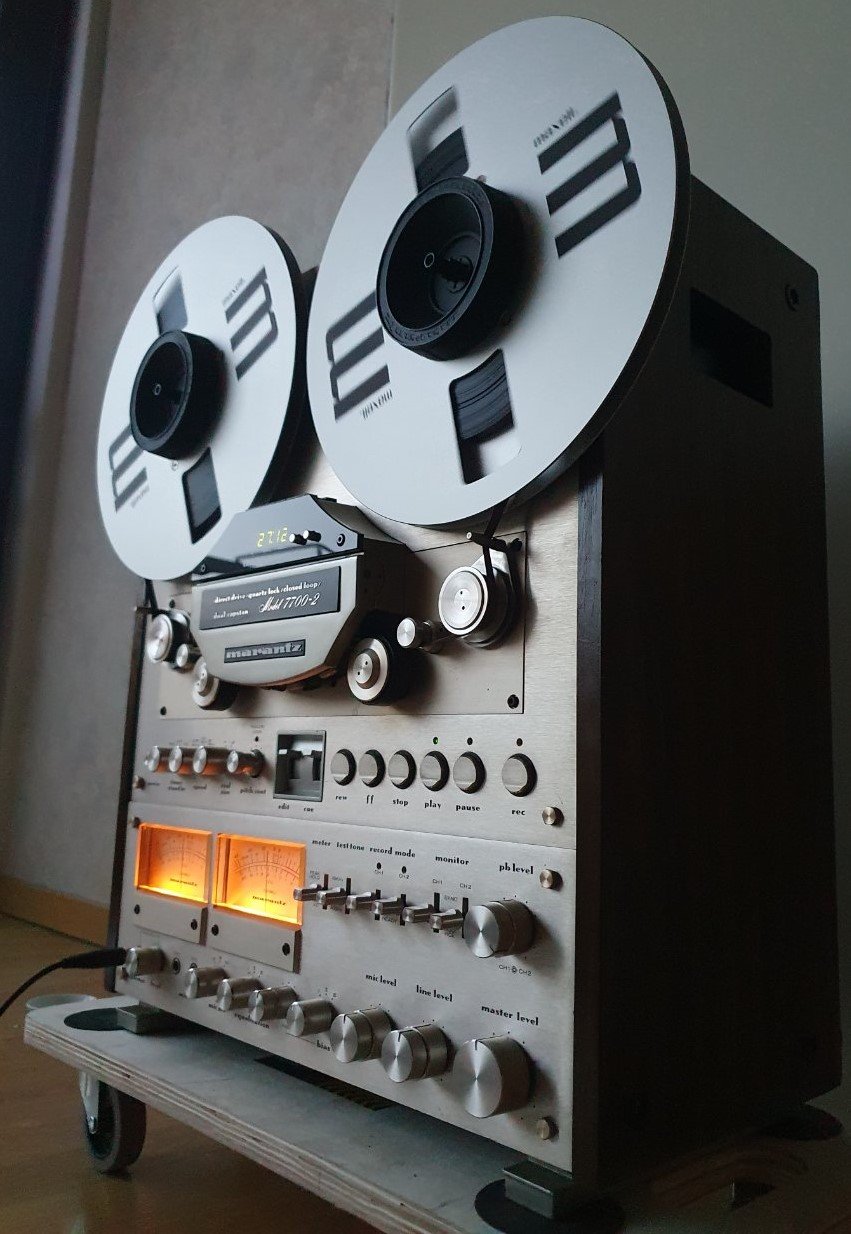
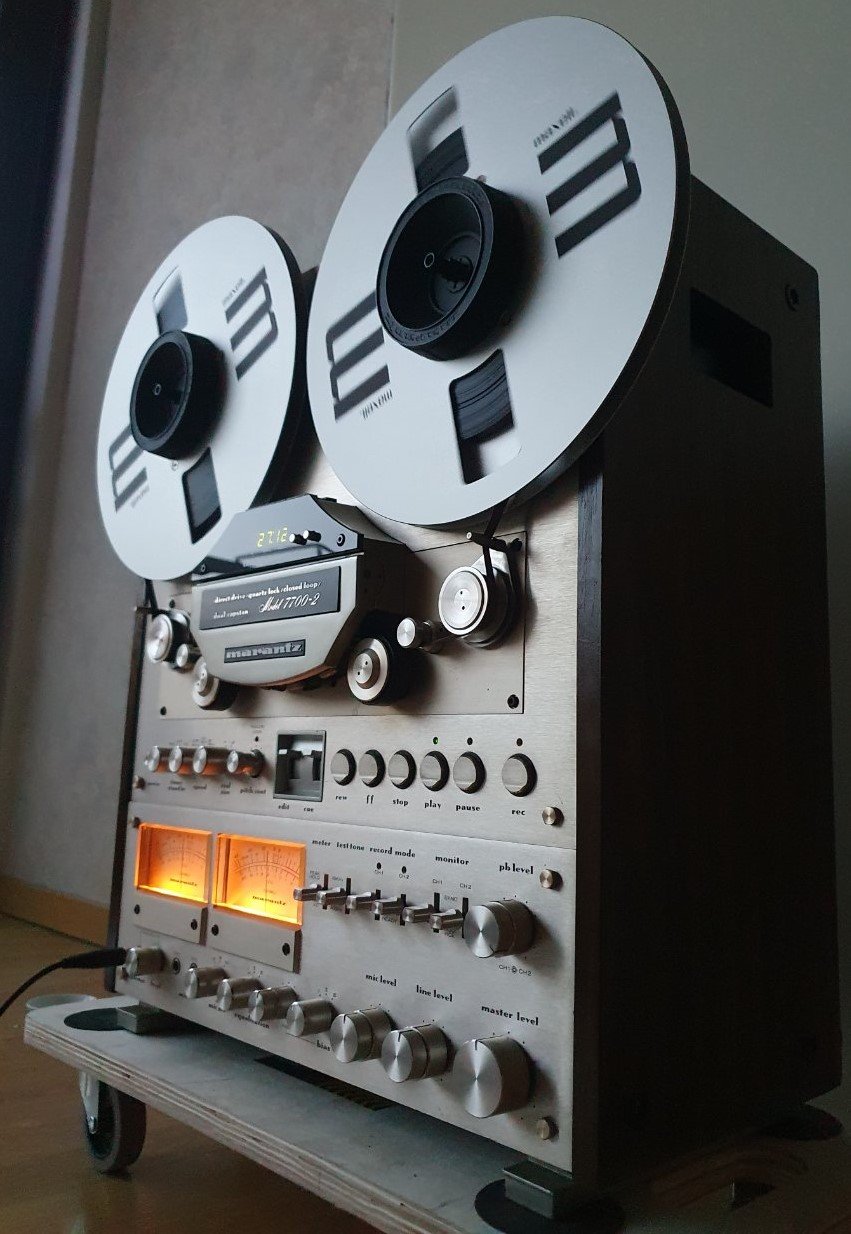
The Marantz 7700 or 7700-2 reel-to-reel tape machine clearly belongs to the second category: It was developed in the late 70s, extensively featured in trade magazines – but never went into mass production.LinkedIn+1
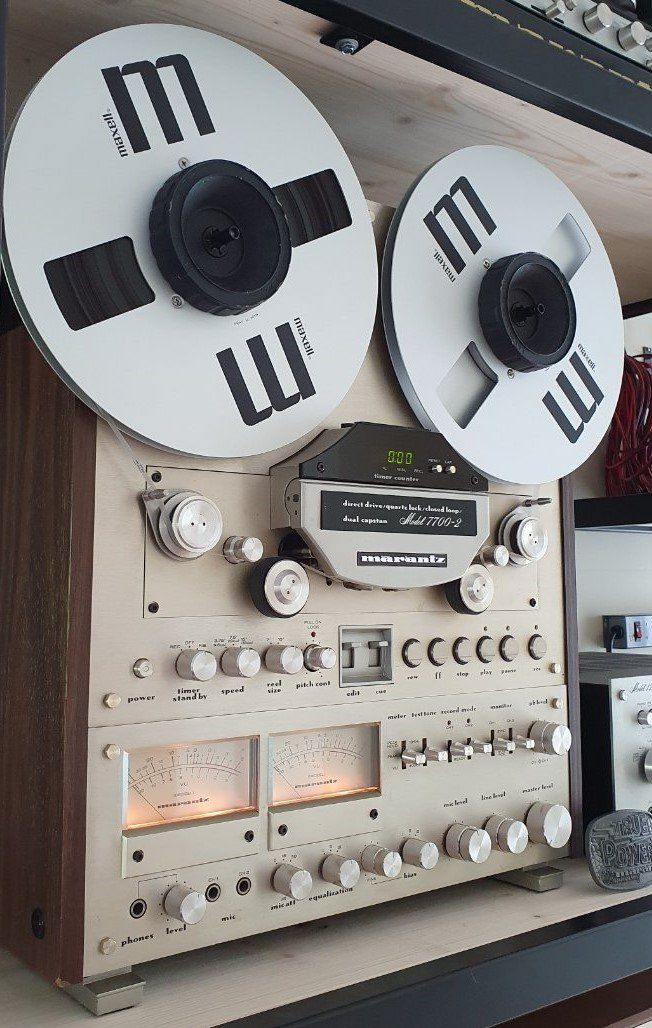
Today it is consideredthe holy grail among Marantz collectors, a tape machine that visually fits perfectly with the classic champagne Marantz look and technically plays at the level of professional studio machines. Only a handful of specimens are known.Reel to Reel
This article onmySoundbookilluminates:
- how the Marantz 7700-2 came to be
- what it cost back then
- and in which price range afully restored specimencould realistically be today.
Marantz and the never-built tape machine flagship.
In the 70s, Marantz was mainly known for high-end receivers and amplifiers. Open reel tape machines weren't really in the Japanese program until the introduction of the.Marantz 7700/7700-2around 1978/79 at trade fairs like the Japan Audio Fair and CES in Las Vegas.LinkedIn+1
Key facts:
- Prototype instead of series device.
The 7700-2 was shown in brochures and tests but was never brought to regular trade.Facebook+1 - Extremely low production numbers.
Depending on the source, onlyfour to a maximum of ten machineswere built in the Japanese development lab – partly as a 2-track version with 4-track playback, partly as pure 4-track machines.LinkedIn+1 - Myth through invisibility.
One specimen with serial number000001Pis documented, a few more devices have appeared in collector's hands in Europe. Publicly traded offers are practically unknown – which fuels the cult status further.Reel to Reel+1
In short: Marantz built a tape machine flagship, showed it to the world – and then disappeared from this market before the series could even start.
Technology: State of the Art late 70s.
Technically, the 7700-2 was also a statement: Marantz didn't just want to build 'any' tape machine, but wanted to compete in the top league right away.
Important key data of the Marantz 7700-2:hifi-wiki.de+1
- 3 motors(Dual-capstan drive + two reel motors)
- 6 heads, recording and playback in 2- and 4-track, erase heads separate.
- Three tape speeds: 9.5 / 19 / 38 cm/s (3¾ / 7½ / 15 ips)
- Pitch control: ±6 % – ideal for fine-tuning or musicians.
- Max. reel diameter: 26.5cm (10½”)
- Frequency response(±3 dB):
- 20–17,000 Hz at 9.5 cm/s
- 20–29,000 Hz at 19 cm/s
- 20–37,000 Hz at 38 cm/s
- Signal-to-noise ratio: > 66 dB
- Fast winding: about 130 seconds for a 540 m tape.
Features included:
- integrated test oscillator (400 Hz & 10 kHz) for calibration.
- combined VU/Peak/Peak-Hold display.
- extensive bias and EQ adjustment options.
In the tests back then, mainly thevery quiet driveand the enormous features were praised - 'impressively smooth tape handling' with a complete set of adjustment options.World Radio History+1
Price back then: High End at luxury rates
Although the Marantz 7700-2 was never produced in series, there are quite clear indications of theplanned selling price:
- Germany (1979): 3,200 DM
- USA: 2,500 US dollarsLinkedIn+1
To put this in context:
- 3,200 DM correspond toaround 1,640 €at the official exchange rate.
- Adjusted for purchasing power, we are talking about an amount that was more in the range of a good used car - so real luxury Hi-Fi for enthusiasts.
For Marantz, the 7700-2 would clearly be positioned astop high-end componentpositioned, comparable to the big Revox, Studer, or Technics machines of that time.
Market comparison: What do top tape machines bring today?
Because there are practically no publicly documented sales of the Marantz 7700/7700-2, a look at other cult tape machines whose prices we know helps:
- Revox B77 Mk.II, fully refurbished
- is quickly around at reputable dealersaround 2,500–2,600 €.Audio Market - Akai GX-747, top condition / refurbished
- depending on market & accessoriesabout 3,000–4,500 €, sometimes even more.Audio Market+2 Classifieds+2 - Technics RS-1500, fully restored
- standard devices in good condition around3,000–4,500 €, elaborate modified high-end builds are sometimes offered for10,000–20,000 US dollarsoffered.tapeheads.net+3 Hifi Shark+3 SkyFi Audio+3
These numbers show:high-quality, fully revised tape machinesare currently in a price range of roughly2,000 to 10,000 €, absolute special modifications above that.
Value today: What would a fully restored Marantz 7700-2 be worth?
Now to the exciting question:What would a fully restored example of the Marantz 7700-2 be worth today?
Important upfront:
- There areno reliable public auction results.
- The machine is extremely rare (4–10 pieces worldwide, depending on the source).LinkedIn+2 HiFi Wiki+2
- Collectors openly say that the price would be 'exotic' if one ever appears.alfa-romeo-portal.com
Based on the known prices for top machines (Revox, Akai, Technics) and the extreme rarity of Marantz, only one can be determinedinformed estimateto submit:
conservative estimate:
onefully restored, visually perfect example of the Marantz 7700-2 would likelyat least 20,000–30,000 €achieve – with realistic potential up to40,000 € or more, if collectors bid against each other.
Why so high?
- rarity– fewer units than many studio machines, some only in single digits.HiFi Wiki
- brand myth– Marantz + never released tape machine = maximum desirability.museumofmagneticsoundrecording.org
- design & optics– perfectly matching the large Marantz receivers and 'state of the art' series.
- story– trade show appearances, tests, then suddenly disappeared. That's exactly the kind of story collectors jump on.
Of course, that's aestimate. Reality decides:
- condition of the heads
- originality (modified or original)
- documented history (prototype number, Marantz proof)
- quality of restoration (fully revised vs. just 'barely works').
cult status: more art object than everyday machine
For the average tape machine fan, the Marantz 7700-2 is moremuseum piece than a daily driver:
- spare parts are practically unavailable.
- service requires specialists who are willing to work on a unique piece.
- The value today lies more indesign, history, and collector statusthan in the pure recording function.
Anyone who just wants to work with tape is much better off with a well-restored Revox B77, Studer, Akai, or Technics RS-1500 – sound-wise at top level, but (still) at somewhat reasonable prices.
Conclusion: The Marantz 7700-2 as the crown of any vintage collection
The Marantz 7700/7700-2 is one of the most fascinating vintage tape machines ever:
- technically on par with the best devices of its time
- visually a dream for fans of classic Marantz components
- historically a‘What if?’ project, that never went into production
Back then, it was supposed to cost around3,200 DM / 2,500 US dollars– today a fully restored example shouldfetch multiple timesof that and play in the league of high-priced art objects.
For most of us, it remains a dream in photos – but exactly such dreams make the charm ofVintage Hi-Fiout. And onmySoundbookyou can dream, compare, browse – and maybe discover the next great love in the form of a more down-to-earth but attainable tape machine.