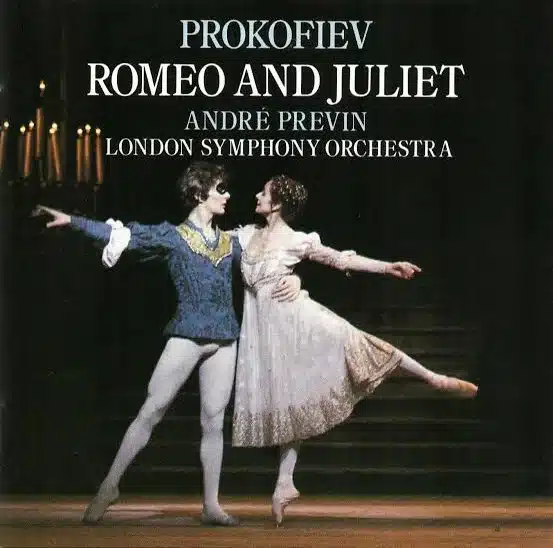

An important tip from me for people who like classical music.
Sergei Sergeyevich Prokofiev was born on April 23, 1891, in Sonzowka in the Russian Empire – now part of Ukraine. Even as a child, he showed exceptional musical talent: he took piano lessons at four, and by five he had written his first composition. His talent was nurtured early on, including by Reinhold Glière and Alexander Glasunov.
At just 13, he began studying at the St. Petersburg Conservatory. There, he learned under great names like Nikolai Rimsky-Korsakov and Anatoly Lyadov. As a young man, he made a name for himself as a brilliant pianist and an unconventional composer.
After the October Revolution in 1917, Prokofiev left Russia for the USA. However, the big breakthrough didn't happen there. So in 1920, he moved on to Paris, where he lived, concertized, and composed for many years. In 1923, he married the Spanish singer Carolina Codina, with whom he had two sons.
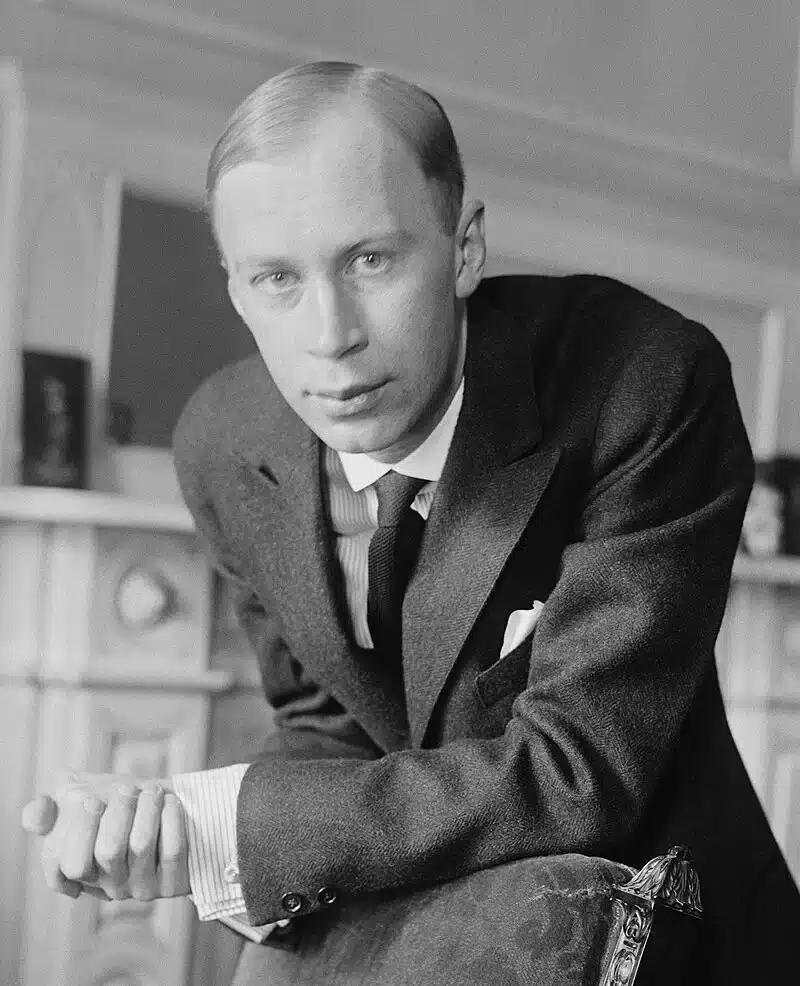
Time and again, he was drawn back to the Soviet Union – in 1936 he finally settled permanently in Moscow. Many of his most famous works were created there: the musical fairy tale‘Peter and the Wolf’(1936), the ballet‘Romeo and Juliet’(1940) and the haunting film music for‘Alexander Nevsky’(1938).
But life under Stalinism wasn't easy: in 1948 he was criticized by the party as a ‘formalist’ and forced to adapt. He was also in poor health – after a fall in 1945, his condition permanently worsened.
Despite everything, Prokofiev remained creative until the end. He died on March 5, 1953 – coincidentally on the same day as Stalin. In the shadow of the state mourning for the dictator, his death went largely unnoticed. Not even flowers were laid at his grave.
Today, Sergei Prokofiev is considered one of the most important composers of the 20th century. His music combines Russian tradition, modern expressiveness, and a unique narrative art that continues to fascinate.
🕊️A life for music – between fame, repression, and artistic courage.