Björn Ulvaeus and Benny Andersson, two of the ABBA musicians, founded the legendary 'Polar Studios' in Stockholm, Sweden, together with their band manager Stig Anderson. At that time, the 'Polar Studios' were the most modern recording studio in the world. Stig Anderson was the owner of the Polar Music record label.
The 'Polar Studios' were founded in 1978, ABBA had been looking for a suitable studio for a long time, and so the band members decided to create their own studio. Here they had the opportunity to realize their own ideas.
In the studios, among other things, the last three ABBA albums 'Voulez-Vous', 'Super Trouper', and 'The Visitors' were created, as well as their last two non-LP singles 'The Day Before You Came' and 'Under Attack'. After ABBA split up, the individual members continued to use the studio to realize their solo projects.
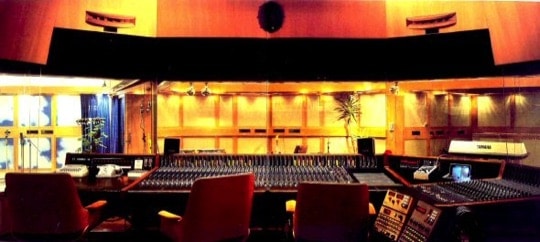
Early non-ABBA albums in the studio included the Genesis album Duke (1980), followed by ABBA singer Anni-Frid Lyngstad's album Something's Going On (which was produced by Genesis drummer Phil Collins). Led Zeppelin recorded their 1979 album “In Through the Out Door” here. Artists such as the Ramones, Rammstein, Roxy Music, Genesis, Adam Ant, Rolling Stones, Backstreet Boys, Beastie Boys, Belinda Carlisle, Burt Bacharach, Celine Dion, Roxette and Joan Armatrading as well as many major Swedish artists have recorded at Polar Studios. The Polar Studios soon became as well-known in the music world as the Beatles' Abbey Road Studios in London.
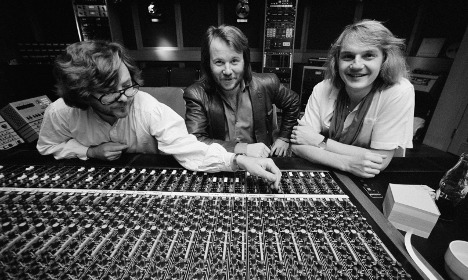
The heart of the studio was a “Harrison mixer,” modified by technician Leif Mases to give it a unique sound. Harrison is a mixing console manufacturer based in Nashville, Tennessee. ABBA's "The Visitors" marked a turning point for Polar, recorded on the studio's new 3M digital recorder, making it one of the first mainstream digital pop records.
Das Musikvideo für ABBA´s „Gimme! Gimme! Gimme! (A Man After Midnight)“ wurde im Studio gedreht. Es zeigte die Gruppe, die die Spur aufzeichnet, obwohl in Wirklichkeit die Audioaufnahme bereits abgeschlossen war. Am selben Tag filmte die Gruppe dort auch das spanische Video für „Estoy Soñando“.
Der Besitzer des Gebäudes habe die Miete 2004 beinahe verdreifacht, berichtete die schwedische Zeitung „Svenska DTerms and conditionsladet“. Dies könne Polar nicht mehr zahlen. Das Studio hat seitdem mehrmals die Adresse gewechselt. Im Herbst 2015 wurde ein Teil des Inventars in einem Lager untergebracht.
Technology
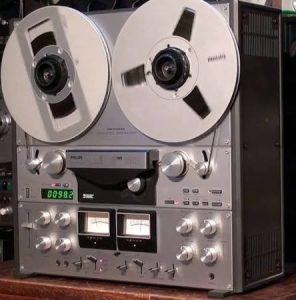
Polar's studio technology consisted of two areas. Studio A used analog tape machines while Studio B had the latest digital equipment.
Technology Studio A:Solid State Logic 4056 Series mixing console, paired with a combination of a Studer A-820 24-track, Studer A-827 24-track, or Otari DTR-900 MK II 32-track tape machines. Studio A has four separate rooms, each with different acoustics.
Technology Studio B:48-channel Calrec UA 8000 mixing console, paired with a 3M digital 32-track audio recorder. When Polar introduced this setup in 1981, it was one of the first digital studios in the world. Studio B consisted of a 'live room' where musicians performed.
After contractual and financial disputes and arguments with the individual ABBA members, Stig Anderson sold Polar Music, including almost all licensing and exploitation rights to the registered trademark 'ABBA' in 1990 to the media company Polygram, which in turn was acquired by Universal Music in the late 1990s.